
Key Takeaways
- A high-efficiency furnace upgrade is often possible, but it is not just a cabinet swap. Venting, drainage, fuel supply, airflow, and controls need review.
- Condensing equipment needs a suitable vent and condensate plan. Do not assume the existing chimney or metal flue can be reused.
- Natural gas and propane require different checks. The exact furnace and any listed conversion kit must match the fuel and installation.
- Compare the whole installed project. Efficiency, sizing, ductwork, and local energy costs all affect the result.
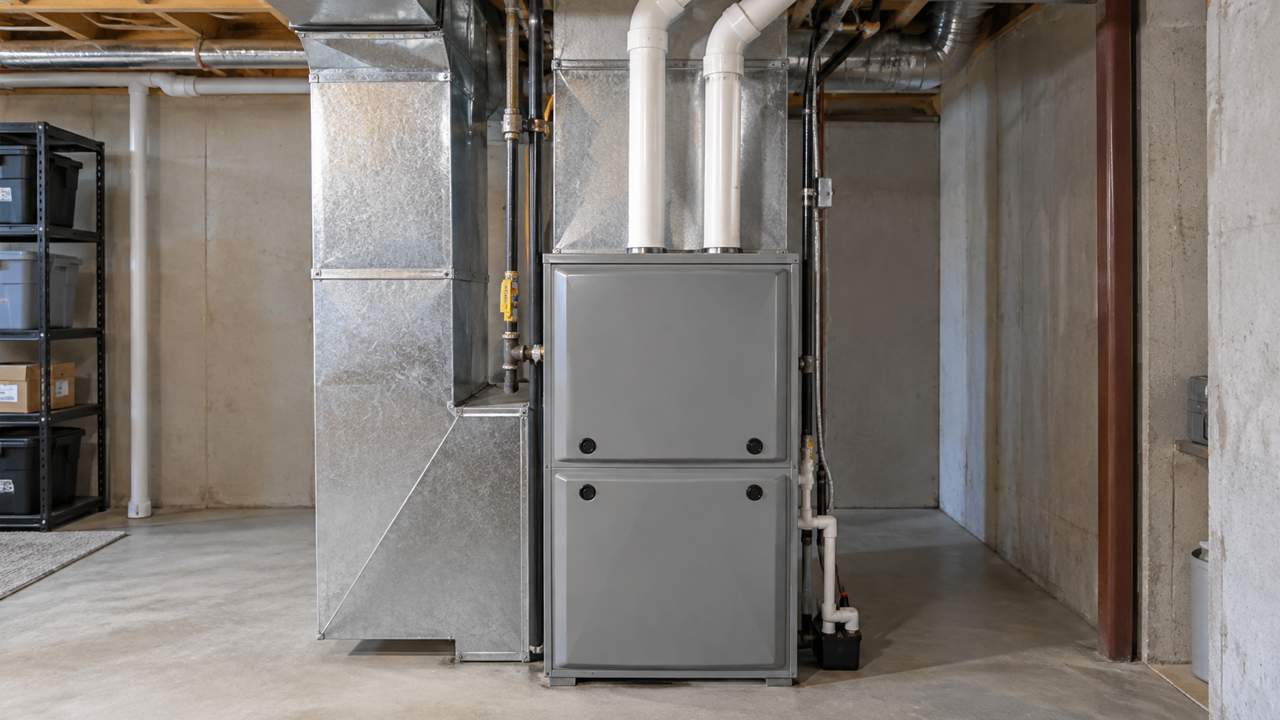
You can often replace an older furnace with a high-efficiency model, but the home must support the new equipment's venting, drainage, fuel, and airflow requirements. Have a qualified installer assess the complete project before selecting a furnace based only on its AFUE rating or matching the old unit's BTU number.
The biggest changes commonly appear when moving from a noncondensing furnace to a condensing furnace. An installation quote should explain how exhaust will leave the home, where combustion air will come from, how condensate will drain, and which existing components can remain.
What Makes a Furnace High Efficiency?
AFUE, or annual fuel utilization efficiency, describes fuel-to-heat performance over a standardized heating season. It is useful for comparing furnace models, but it is not a promise of the same percentage reduction in your total utility bill.
A condensing furnace recovers additional heat from combustion exhaust. Water vapor condenses during that process, which changes the venting and drainage requirements. Efficiency is also separate from staging and blower operation: compare the actual model's specifications rather than treating every high-efficiency furnace as having the same controls or comfort features.
Improving insulation, fixing duct leakage, and selecting the right capacity can also matter. A higher AFUE rating does not correct poor distribution or an oversized system.
Venting and Combustion Air Need a New Assessment
Do not assume a condensing furnace can be attached to the old metal flue. Vent material, pipe size, equivalent length, slope, termination, and installation configuration must follow the exact equipment instructions and local requirements. Approved materials vary; a generic instruction to use plastic pipe is not enough.
The installer must also confirm combustion-air provisions. Some installations use a dedicated outdoor-air intake, while other approved configurations have different requirements. The location of windows, doors, walkways, snow accumulation, and nearby equipment can affect whether a proposed termination works.
What if the Furnace and Water Heater Share a Chimney?
Removing the furnace from a shared vent can change how the remaining appliance vents. The water heater and chimney must be evaluated together; a liner change, vent alteration, or another solution may be necessary. Do not leave that assessment until after the furnace has been disconnected.
Gas piping, venting, and combustion testing are professional work. Do not improvise connections, block air openings, or bypass safety devices.
Where Will the Condensate Go?
A condensing furnace needs an approved way to collect and remove condensate. The location of a suitable drain, the appliance orientation, the route through the home, and local requirements all matter. A condensate pump or other accessories may be needed where gravity drainage is not practical.
The installer should address traps, maintenance access, freezing exposure, and whether condensate treatment is required. Do not assume the air conditioner's existing drain arrangement is automatically suitable for the new furnace.
If the furnace is in an attic, garage, or another area subject to low temperatures, ask specifically how drainage and equipment operation will be protected within the manufacturer's installation limits.
Natural Gas vs Liquid Propane Furnace Upgrades
Confirm the actual fuel before ordering. A furnace sold for natural gas is not automatically ready for propane, and the existence of a conversion kit for one model does not establish compatibility for another.
For a propane installation, confirm the exact model's approval and any manufacturer-listed conversion kit, gas-pressure requirements, regulator arrangement, tank capacity, and fuel-delivery needs. A qualified professional must perform and verify any permitted conversion.
For natural gas, the installer still needs to check supply pressure, piping capacity, and other connected appliances. Upgrading efficiency does not remove the need for a complete fuel-supply assessment.
Fuel prices and heating usage vary. Compare local delivered propane costs or natural-gas tariffs when evaluating economics rather than assuming the same payback for both fuels.
Sizing, Ductwork, Cooling Equipment, and Controls
Use a current heating-load assessment rather than copying the old input rating. Input BTU describes fuel energy entering the furnace; output describes delivered heat under the rated conditions. A more efficient replacement may deliver a different amount of heat at the same input rating.
Check cabinet width, installation orientation, supply and return transitions, filter cabinet, service access, and cooling-coil fit. A physical fit alone does not establish that an existing air conditioner or heat pump is an approved match.
The blower must operate within the equipment's airflow and static-pressure requirements. Existing restrictive returns, dirty coils, undersized filters, or leaking ducts should be addressed rather than concealed by a new furnace.
Thermostat wiring and controls also need review. Staging, communicating controls, and dual-fuel operation can have model-specific requirements. Confirm compatibility before purchasing a thermostat or assuming every existing wire can be reused.
Collect your equipment information using our guide to reading a furnace model number before replacement.
What Changes the Upgrade Cost?
The furnace price is only one part of the project. Vent routing, drain work, chimney modifications, gas and electrical work, duct transitions, permits, access, and commissioning can change the installed cost.
Ask for itemized quotes based on the same scope. A quote that omits a shared-chimney correction or a difficult condensate route is not directly comparable with one that includes it.
Higher efficiency can reduce fuel use for the same useful heat, but savings depend on the old equipment's actual performance, usage, local fuel rates, installation quality, and other home conditions. Do not treat a simple AFUE difference as a guaranteed whole-bill saving or payback period.
Confirm current incentive eligibility directly with the applicable program before budgeting for a credit or rebate. Rules, qualifying equipment, dates, and household requirements can change.
Before You Order: Upgrade Planning Checklist
- Record the complete existing furnace, thermostat, and cooling-equipment model numbers.
- Identify natural gas or propane and any conversion labels.
- Arrange a heating-load and airflow assessment.
- Confirm an approved exhaust and combustion-air route.
- Identify a suitable condensate destination and any pump or treatment requirements.
- Evaluate every appliance sharing the old chimney or vent.
- Verify cabinet dimensions, orientation, access, filters, controls, and equipment matching.
- Include permits, commissioning, warranty requirements, and maintenance access in the quote.
Frequently Asked Questions
Can I replace an 80% furnace with a high-efficiency furnace?
Often, but the installation must support the specific condensing model. Venting, drainage, fuel supply, cabinet fit, and airflow determine the required work.
Does a high-efficiency furnace need a chimney?
Not necessarily. Many condensing furnaces use a dedicated approved vent system. The installation manual and local requirements determine the permitted arrangement; an existing chimney is not automatically suitable.
Can I keep my air conditioner?
Possibly, if the installer verifies the cooling coil, airflow, controls, physical fit, and applicable equipment-matching requirements. Do not assume every new furnace is compatible with every existing AC.
Can a high-efficiency furnace run on propane?
Some models are approved for propane, sometimes with a specific listed conversion kit. Confirm the exact model and have the installation and conversion performed by a qualified professional.
Plan the venting, condensate, fuel, and airflow details first, then compare furnaces that fit the verified requirements of your home.